

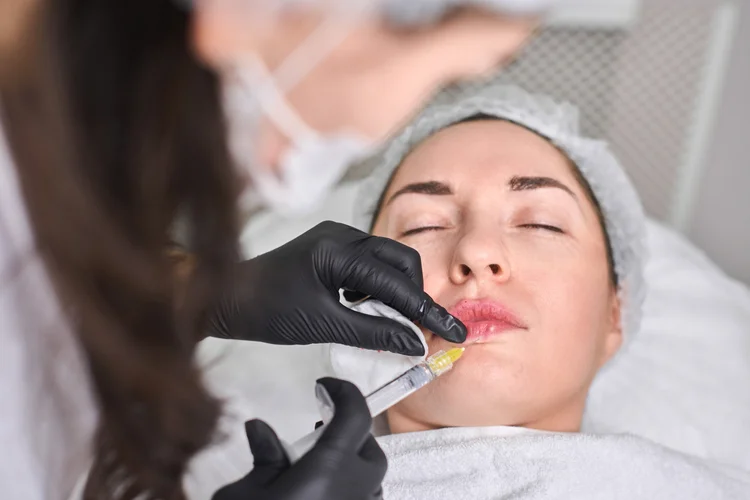
Mastering the Lip Flip – What Every Injector Should Know About the Perioral Area
The lip flip has become one of the most requested non-surgical aesthetic treatments for subtle lip enhancement. While the result appears simple and natural, achieving balanced outcomes requires advanced knowledge of perioral anatomy, muscle dynamics, and precise neuromodulator technique. For injectors, mastering the lip flip goes far beyond surface-level injection—it begins with anatomical understanding and thoughtful assessment.
Unlike dermal fillers, the lip flip enhances lip appearance without adding volume. Instead, it relies on controlled muscle relaxation, making injector skill and judgment critical.
Understanding How the Lip Flip Works
The lip flip is performed by injecting small amounts of a neuromodulator into the orbicularis oris muscle. This gently relaxes the muscle, allowing the upper lip to roll outward and appear more prominent when the face is at rest or during speech.
Because the treatment alters muscle behavior rather than structure, injectors must accurately evaluate:
- Lip movement at rest and animation
- Muscle strength and tone
- Upper-lip length and tooth show
- Individual facial anatomy
Incorrect assessment can lead to functional issues or unsatisfactory aesthetic outcomes.
The Importance of Consultation and Patient Selection
A successful lip flip begins with a thorough consultation. While many clients request more visible lips, not all patients are ideal candidates for a lip flip as a standalone treatment.
Injectors should assess:
- Smile dynamics and lip mobility
- Upper-lip length and resting position
- Perioral muscle dominance
- Client expectations and aesthetic goals
In some cases, combining a lip flip with dermal fillers or skin rejuvenation treatments produces a more balanced and harmonious result. Clear communication helps ensure appropriate treatment selection.
Precision, Dosing, and Injection Technique
Precision is essential when performing a lip flip. Over-relaxation of the orbicularis oris can affect speech, drinking, and overall lip function, while under-treatment may result in minimal or short-lived effects.
Key technical considerations include:
- Using low doses with strategic placement
- Maintaining appropriate injection depth
- Preventing diffusion into adjacent muscles
- Balancing symmetry and muscle response
Small adjustments can have a significant impact on both aesthetics and function.
Perioral Anatomy Every Injector Must Understand
Advanced knowledge of surrounding facial muscles is critical for predictable results. Understanding the interaction between the orbicularis oris and nearby muscles helps injectors anticipate how the lip will respond during expression.
Important muscles include:
- Depressor septi nasi
- Levator labii superioris
- Zygomaticus major and minor
This knowledge is especially important in patients with hyperdynamic smiles or asymmetry, where subtle corrections can dramatically improve outcomes.
Post-Treatment Care and Client Education
Post-treatment education is a key component of professional injector practice. Clients should understand:
- What to expect in the first few days
- Temporary changes in lip movement or sensation
- Aftercare guidelines
- When follow-up or combination treatments may be beneficial
Managing expectations builds trust and supports long-term client relationships.
Why the Lip Flip Is a Valuable Skill for Injectors
As demand grows for subtle, natural-looking lip enhancement, the lip flip remains a powerful technique for trained injectors. When performed correctly, it enhances aesthetics without volume overload and complements other facial treatments.
Training programs offered by institutions such as Chellsey Institute focus on anatomy-driven, safety-first injectable education—helping practitioners refine techniques like the lip flip with confidence and precision.
Frequently Asked Questions (FAQs)
A lip flip uses a neuromodulator to relax the upper lip muscle, while lip fillers add volume using dermal filler. A lip flip enhances lip visibility without increasing size.
Ideal candidates have adequate lip volume but limited upper-lip visibility, especially during smiling. Strong muscle activity often responds well to this treatment.
Temporary changes may occur if dosing is excessive. Proper technique and conservative dosing minimize functional side effects.
Results typically last 6–8 weeks, depending on metabolism and dosage, as neuromodulators wear off faster in highly mobile areas.
Yes. Lip flips are commonly combined with dermal fillers or skin treatments to achieve balanced, natural-looking results.
Mastering techniques like the lip flip requires advanced anatomical knowledge, hands-on practice, and expert guidance. The Botox & Dermal Fillers Training Course at Chellsey Institute is designed for medical professionals seeking safe, modern, and effective injection skills.