How to Practice Facial Mapping as a Beginner Injector
Written by Ahmed Rashed
A beginner-friendly guide to learning facial mapping for safe and effective Botox and dermal filler treatments in aesthetic practice.
For new aesthetic injectors, facial mapping is one of the most important foundational skills to master. It goes beyond drawing lines on the face—it involves understanding anatomy, analyzing individual facial movement, and planning precise injection placement. Early proficiency in mapping improves treatment accuracy, enhances aesthetic balance, and reduces complication risk.
Across Canada’s growing medical aesthetics field, injectors who develop strong assessment and mapping skills early are better equipped to deliver safe, customized, and natural-looking results.
Understanding Facial Anatomy and Landmarks
Effective facial mapping begins with detailed anatomical knowledge. Injectors must recognize muscles, vascular structures, fat compartments, and skeletal landmarks that influence both safety and aesthetic outcome.
Key facial areas to study and map include:
- Glabella (frown complex)
- Frontalis (forehead)
- Orbicularis oculi (crow’s feet)
- Zygomatic arch and cheek support
- Nasolabial folds and marionette lines
- Mentalis and jawline
Accurate landmark identification helps avoid high-risk vascular zones and ensures balanced injection placement.
Preparing a Clean and Visible Mapping Surface
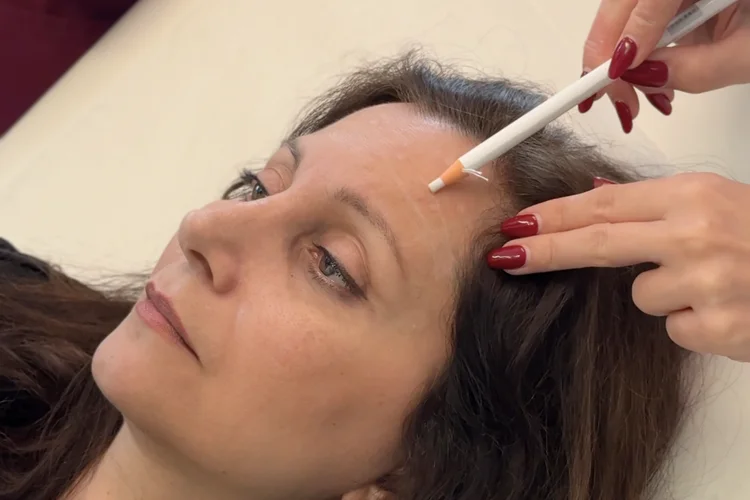
Facial mapping should always be performed on cleansed skin under good lighting to ensure precision and hygiene. Using a fine-tip cosmetic or surgical marker allows injectors to draw clear and controlled reference points.
Best practices include:
- Thorough skin cleansing
- Adequate clinical lighting
- Fine-tip skin-safe marker use
- Symmetrical, neat markings
A clean and visible mapping surface supports accuracy and professional presentation.
Mapping Based on Facial Movement
Dynamic facial assessment is essential, particularly for neuromodulator treatments such as Botox. Asking the client to animate facial expressions reveals muscle strength, asymmetry, and wrinkle patterns.
Movement-based assessment evaluates:
- Muscle dominance and activity
- Wrinkle formation patterns
- Facial asymmetry
- Volume deficiency zones
This real-time observation guides individualized injection planning rather than relying on fixed templates.
Using Proportional and Aesthetic Guidelines
Facial harmony principles such as the Rule of Thirds and Golden Ratio help injectors assess balance and proportion. These guidelines support decisions on where volume restoration or muscle relaxation is needed to achieve natural-looking outcomes.
Proportional mapping improves:
- Facial symmetry
- Contour balance
- Volume placement accuracy
- Overall aesthetic harmony
Practicing Mapping Before Live Treatments
Beginners should refine mapping skills in controlled practice settings before performing injections on clients. Repetition improves both anatomical recognition and hand precision.
Effective practice methods include:
- Facial anatomy charts
- Silicone or mannequin practice faces
- Case-study photographs
- Instructor-guided exercises
Structured practice builds confidence and consistency in real clinical environments.
Documenting and Evaluating Results
Photographic documentation allows injectors to compare mapping plans with post-treatment outcomes. Reflective analysis helps refine placement accuracy and aesthetic judgment over time.
Good documentation habits include:
- Pre- and post-treatment photos
- Mapped reference images
- Treatment notes
- Outcome evaluation
Continuous review accelerates skill development and clinical confidence.
Facial Mapping Training at Chellsey Institute
At Chellsey Institute of Beauty & Health in Mississauga, facial mapping is taught as a core component of Botox and dermal filler certification programs. Students learn anatomical assessment, injection planning, and mapping techniques through guided theory and hands-on practice.
This structured training helps beginner injectors progress from uncertainty to confident, precise treatment planning in aesthetic practice across Ontario and Canada.
Mastering the Foundation of Safe Injecting
Every successful injectable treatment begins with accurate mapping. By combining anatomical knowledge, dynamic assessment, and structured practice, beginner injectors can develop the precision and safety awareness required for professional aesthetic practice.
Explore Chellsey Institute Injectables Certification Programs
Frequently Asked Questions (FAQs)
It is the process of marking anatomical landmarks and injection points to plan safe and balanced Botox or filler treatments.
It improves injection accuracy, enhances symmetry, and reduces the risk of complications.
Using anatomy charts, mannequin faces, case photos, and supervised training before working on clients.
Yes. Muscle activity patterns and asymmetry guide individualized injection placement, especially for Botox.
Yes. Accredited Botox and dermal filler programs include facial anatomy and mapping training.