5 Common Skincare Myths Your Clients Probably Believe
Written by Ahmed Rashed
Help your clients separate skincare facts from viral beauty myths.
In today’s social-media-driven beauty industry, skincare misinformation spreads faster than ever. From TikTok skincare hacks to influencer trends, many clients arrive with incorrect assumptions about products and treatments.
For estheticians and skincare professionals in Canada, client education is essential. When clients understand real skin science, they trust your recommendations, follow treatment plans, and achieve better long-term results.
Here are five common skincare myths your clients may believe—and how professionals should address them.
Myth 1: “If it burns, it’s working.”
Many clients associate tingling or burning with effectiveness. In reality, this often indicates irritation or skin barrier damage caused by harsh actives or over-treatment.
Professional insight: Effective skincare should strengthen the skin barrier, not inflame it. Healthy treatments improve hydration, texture, and resilience without discomfort.
Myth 2: “You only need sunscreen in summer.”
Clients often skip SPF in winter or indoors. However, UVA rays penetrate clouds and windows year-round, contributing to premature aging and pigmentation.
Professional insight: Daily broad-spectrum SPF is one of the most important anti-aging and skin-health habits in professional skincare routines.
Myth 3: “Natural skincare is always safer.”
The clean-beauty trend has led many clients to believe natural ingredients are automatically gentle. Yet essential oils and botanical extracts can trigger irritation or allergies.
Professional insight: Safety depends on formulation, concentration, and skin type—not whether an ingredient is natural or synthetic.
Myth 4: “Oily skin doesn’t need moisturizer.”
Clients with oily or acne-prone skin often avoid moisturizers, leading to dehydration and increased oil production.
Professional insight: Lightweight, oil-free, non-comedogenic hydration helps balance sebum and support barrier repair—especially in acne treatments.
Myth 5: “More exfoliation = clearer skin.”
Over-exfoliation is a growing trend due to acids, scrubs, and resurfacing products. Excess exfoliation weakens the skin barrier and triggers sensitivity and breakouts.
Professional insight: Most skin types benefit from gentle exfoliation 1–3 times weekly, guided by professional skin analysis.
Why Client Education Matters in Aesthetic Practice
Modern skincare clients expect professionals to explain treatments, ingredients, and results. Correcting myths builds trust, improves compliance, and positions you as a knowledgeable skincare expert—not just a service provider.
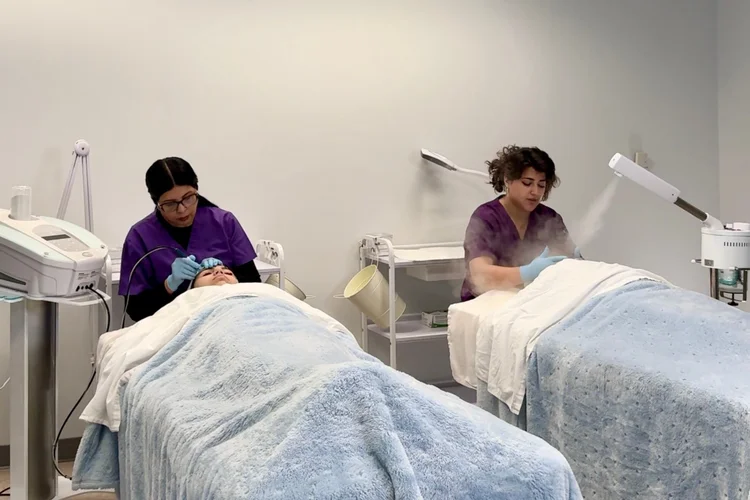
At Chellsey Institute Canada, our aesthetics and esthetician training programs prepare students to understand skin physiology, advanced skincare treatments, and professional client consultation. Graduates develop both technical treatment skills and evidence-based skincare knowledge.
Explore Chellsey Institute Aesthetics Diploma Programs and become a certified skincare professional in Canada with trusted expertise.
Frequently Asked Questions (FAQs)
Mild tingling may occur with some active ingredients, but burning or persistent stinging usually indicates irritation or barrier damage.
Yes. UVA rays are present year-round in Canada and penetrate clouds and windows, contributing to premature aging and pigmentation.
No. Both natural and synthetic ingredients can be safe or irritating depending on formulation, concentration, and skin sensitivity.
Yes. Proper hydration helps regulate oil production and supports skin barrier health, reducing breakouts.
Typically 1–3 times per week, depending on skin type, sensitivity, and professional treatment plan.